
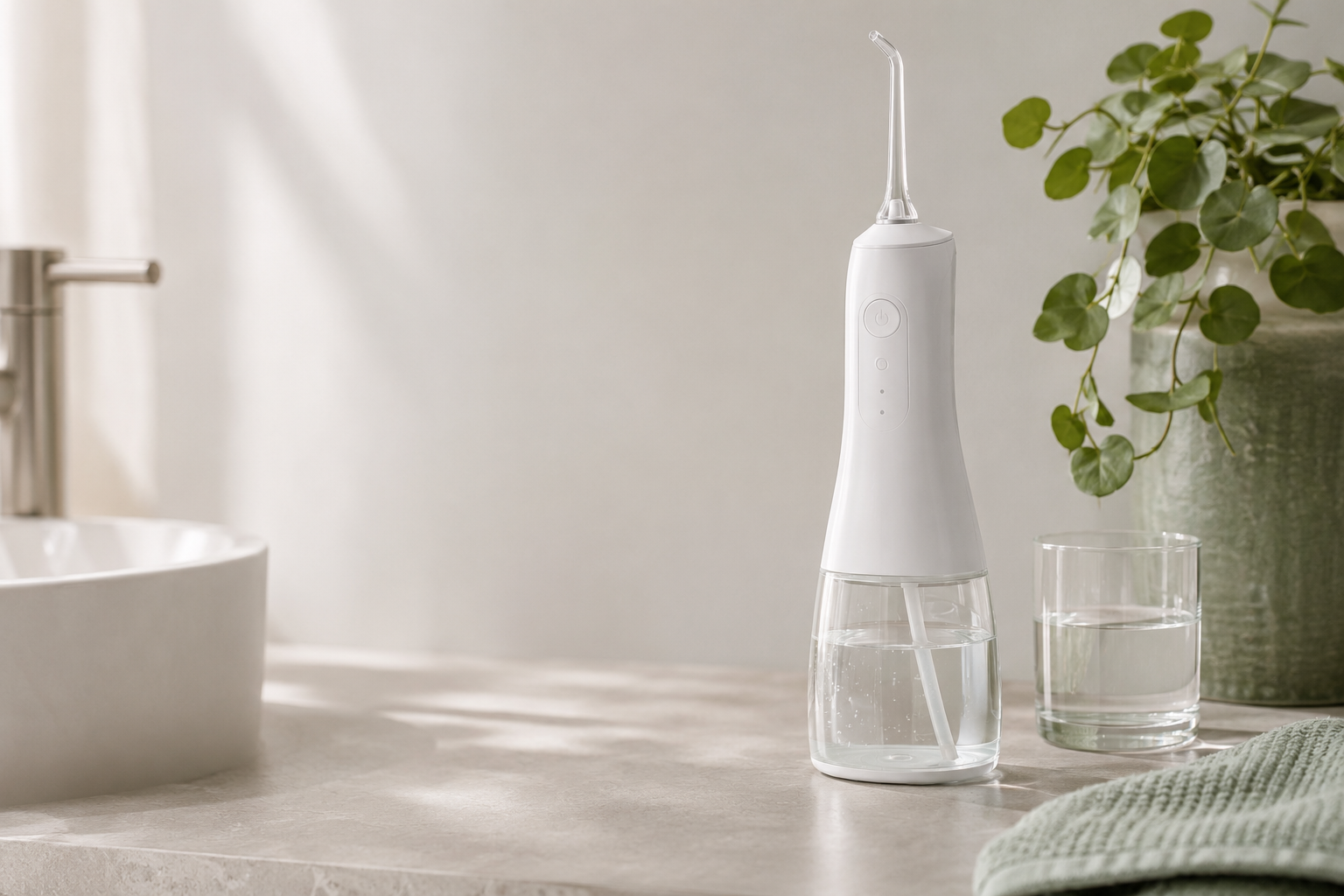
A cordless water flosser in a bright bathroom, illustrating a device used to clean between teeth and around the gumline.
Brushing your teeth twice a day is something most of us do without thinking.
But cleaning between our teeth? That's often a different story.
Perhaps you've tried traditional floss and found it awkward. Maybe you've struggled to fit interdental brushes between your teeth. Or you've seen water flossers online and wondered whether they're worth the investment.
Water flossing has become increasingly popular, promising an easier way to clean those hard-to-reach spaces. But how effective is it? Can it replace traditional floss? And who would benefit most from using one?
What Is Water Flossing and How Does It Work?
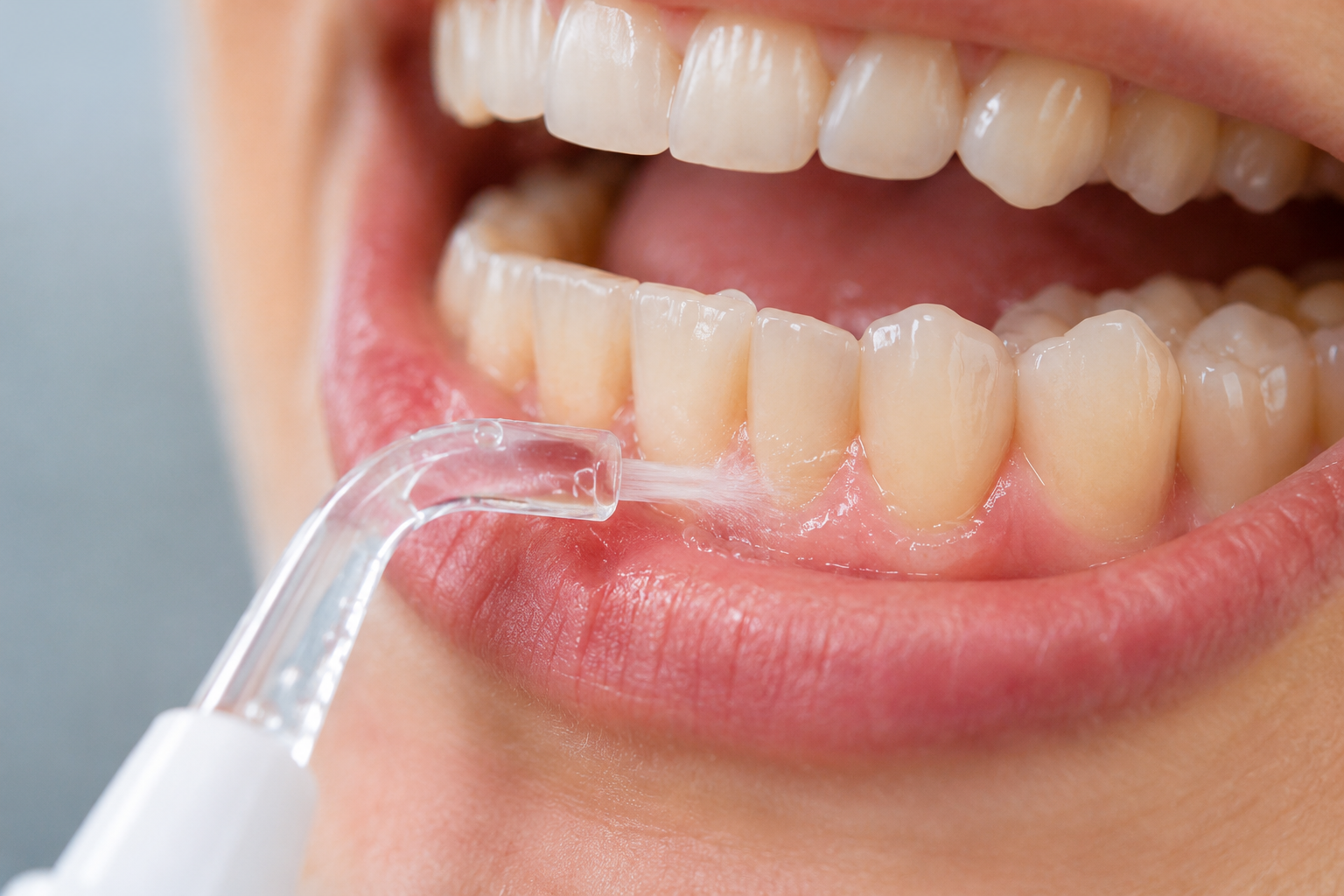
A water flosser is a handheld device that uses a steady or pulsing stream of water to clean between your teeth and around your gums. You fill it with water, choose a pressure setting and guide it along your gumline and between your teeth.
The water helps wash away trapped food and disrupt plaque, the sticky film of bacteria that builds up on your teeth throughout the day.
Unlike traditional dental floss or interdental brushes, water flossers don't rely on direct contact with the tooth surface, instead they use water pressure to clean areas that can sometimes be difficult to reach.
And while that sounds simple, it can offer some useful benefits.
What Are the Benefits of Water Flossing?
1. It Can Help Improve Gum Health
One of the main benefits of water flossing is its ability to reduce gum inflammation and bleeding.
Plaque that collects around the gumline can irritate your gums, causing them to become red, swollen or sensitive.
Research suggests that regular water flossing, alongside brushing, can help reduce these symptoms.
However, bleeding gums shouldn't simply be ignored. If your gums bleed regularly, it's important to have them checked by a dental professional.
2. It Makes Cleaning Difficult Areas Easier
Some parts of your mouth are harder to clean than others.
Back teeth, awkward spaces and areas around dental restorations can make traditional flossing frustrating. A water flosser can help flush away trapped food from these areas without requiring you to thread floss between every tooth.
For people who find traditional flossing difficult, this convenience can make daily cleaning feel much more manageable.
3. It May Help You Maintain a Better Routine
The best oral hygiene routine is one you can maintain, so if you find traditional flossing uncomfortable or time-consuming, you might be tempted to skip it altogether.
Some people find water flossing easier and more enjoyable, making them more likely to clean between their teeth regularly and consistency plays an important role in keeping your teeth and gums healthy.
Water Flossing vs Traditional Floss: What's the Difference?
Both methods aim to clean areas your toothbrush cannot reach, but they work differently.
Traditional dental floss uses a thin strand that slides between your teeth. When used correctly, it makes direct contact with the tooth surfaces, helping remove plaque.
Water flossers use a stream of water to loosen debris and disrupt plaque around the teeth and gumline.
Research suggests water flossers can be effective at reducing gum bleeding and inflammation. However, they don't necessarily remove attached plaque as thoroughly as a correctly sized interdental brush.
Neither method is automatically the best choice for everyone.
The right option depends on the spaces between your teeth, your dental health and how comfortably you can use each tool.
What About Interdental Brushes?
Interdental brushes, often called TePe brushes, are small brushes designed to fit between your teeth.
When there's enough space, they're generally the preferred option for physically removing plaque. Their bristles make direct contact with the tooth surfaces, helping clean areas your toothbrush misses.
However, not everyone can use them.
If your teeth are tightly positioned, even the smallest interdental brush may not fit comfortably. In these cases, traditional floss or dental tape is often recommended. A water flosser may also be helpful, particularly if you struggle with flossing.
Never force an interdental brush between your teeth. Your hygienist can help you choose the correct size.
Who Can Benefit Most From Water Flossing?
Although many people can benefit from water flossing, certain patients may find it especially useful.
People With Dental Implants
Dental implants require careful daily cleaning to keep the surrounding gums healthy. While implants cannot develop tooth decay, plaque can cause inflammation around them and may contribute to peri-implant disease.
Water flossers can help clean around certain implant restorations, particularly where food becomes trapped or access is difficult. However, the best cleaning method depends on the design of your implants. Your dental team may recommend special interdental brushes, floss or a combination of methods.
People With Very Tight Spaces Between Their Teeth
If interdental brushes won't fit between your teeth, water flossing may offer another way to clean these areas.
Traditional floss remains a useful option for tight contacts, but a water flosser can be particularly handy if you find it difficult to use.
People With Braces or Dental Bridges
Brackets, wires and dental bridges can create areas where food and plaque collect.
Water flossing may make it easier to flush debris from around these structures.
However, it should complement any specific cleaning tools recommended by your dentist or orthodontist.
People Who Struggle With Traditional Floss
Some people find dental floss difficult to handle, particularly when reaching their back teeth.
A water flosser may be easier to control and encourage more regular cleaning.

How Often Should You Use a Water Flosser?
Water flossing can form part of your daily oral hygiene routine.
Start with a low-pressure setting and guide the water gently along your gumline and between your teeth. There's no need to use the highest pressure. Comfortable, consistent cleaning is more important.
Remember that water flossing doesn't replace brushing twice a day with fluoride toothpaste, and depending on your teeth, you may still benefit from using traditional floss or interdental brushes.
Is a Water Flosser Worth It?
For some people, absolutely. But you don't necessarily need one to have healthy teeth and gums.
Water flossing shouldn't automatically replace traditional floss or interdental brushes. Think of water flossing as an extra tool to support your oral hygiene, rather than a shortcut around cleaning between your teeth. Sometimes, a simple interdental brush or dental floss is all that's required.
At Lytham Dental Clinic, we believe good oral hygiene isn't about buying the latest device. It's about understanding your mouth and finding the most effective way to care for it.
During a dental hygiene appointment, we can assess your gum health, identify areas that need extra attention and recommend the cleaning methods best suited to your teeth.
Because the best flossing method isn't always the newest or most expensive. It's the one that helps you keep your teeth and gums healthy.
Not sure which cleaning method is right for you? Book a hygiene appointment at Lytham Dental Clinic for personalised advice on caring for your teeth, gums and dental implants.